
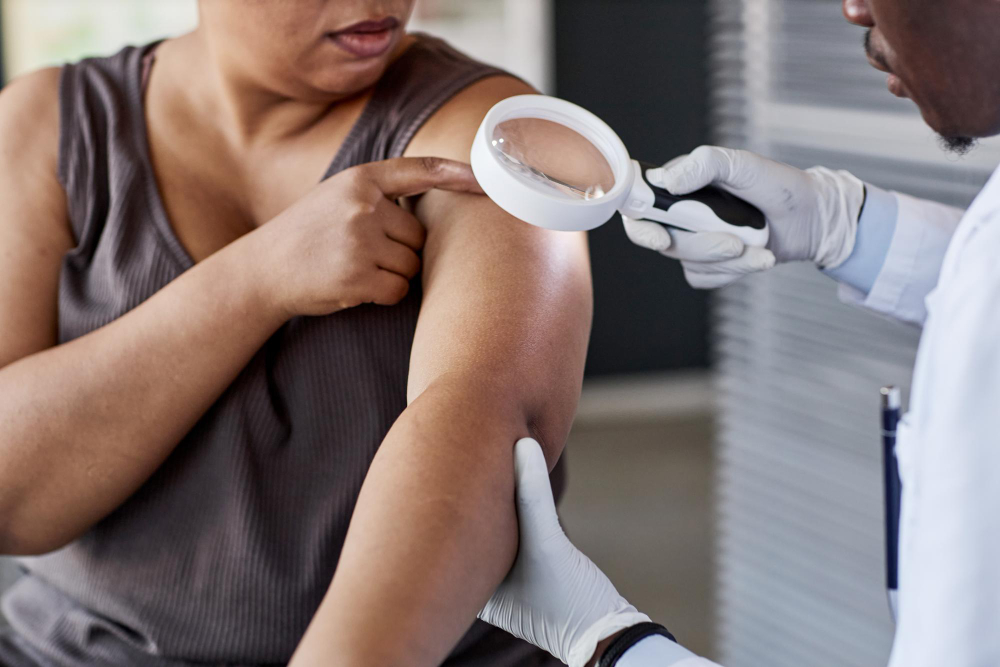
Skin Cancer Detection and Treatment
- Basal Cell Carcinoma (BCC) BCC are growths or lesions that occur in the skin with the appearance of a sore, bump, scar or redish pink formation. BCC is a form of skin cancer that can be a result of frequent and intense sun exposure.
- Squamous Cell Carcinoma (SCC) SCC is another uncontrollable growth that resembles the appearance of an open sore or wart, and will often bleed or crust. SCC can also be a result of significant sun exposure, and can appear on any part of the body including the genitals or mucous membranes. SCC can become detrimental if left untreated.
- Melanoma is the most dangerous form of skin cancer that develops when damaged skin cells trigger genetic defects. This then leads to rapidly multiplying skins cells that eventually turn into malignant tumors. Melanoma can resemble the appearance of a mole or can develop from a mole. Melanoma can also appear pink, purple, red, skin-colored, blue or white, but are generally black or brown. This form of skin cancer is often a result of frequent sun exposure, or a genetic predisposition to the disease.
Melanoma Detection
Melanoma can almost always be cured if it is recognized and treated early on. If not, the cancer may spread to other parts of the body that may become difficult to treat, or fatal. Melanoma is not the most common skin cancer but it is the most fatal. This is why it is important to understand the risks, signs and symptoms of melanoma to detect the cancer early on.
ABCDE’s
- Asymmetry
- Border
- Color
- Diameter
- Elevation
- Moles and Atypical Nevi
It is important to have frequent skin examinations, as well as performing your own exams. Observing the ABCDE’s of your moles and their phases is crucial to fighting the development of melanoma or other dangerous skin disorders. A normal, healthy mole will have symmetry in shape and distinct borders without blurred edges. A healthy mole should not have a discolored appearance. Any mole that has a large diameter or significant elevation should be inspected by your physician. Pay close attention to moles developing in later ages and consult your Doctor if you notice any abnormal qualities.